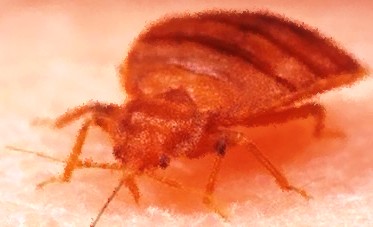
They frequent the bedrooms of both rich and poor. They have piercing-sucking mouth parts that help them to suck the blood from their unsuspecting mammal victims. They feed mostly at night, between 2-4 AM. Later they seek a dark place where they are difficult to find. Sounds like a vampire story, doesn’t it?

Recently bedbugs are finding New Hampshire a cozy place to live. Reportedly a Manchester woman said that she has been trying to rid herself of these tiny terrorists. (Since she lives in an apartment, actually all of her neighbors are also at risk, if you read on). The same article states, “Health officials said they now get reports weekly of occurrences in major cities such as Nashua and Manchester.”
The common bed bug may not originally have been a New Hampshire native. It probably arrived with the early European colonists, along with the cockroach. (Varieties of this bug have been known since ancient times, and Aristotle wrote about them. Also reportedly there is evidence of fossilized bed bugs in Egyptian tombs). Lets face it, Bed bugs suck.
Why are they called “bed” bugs? Since they eat at night, and they likely to stay near their “host” (you), the normal location of their banquet is in your bed, while you are sleeping.
Up until World War II, and definitely during the time of our colonial ancestors, New Hampshire residents would have been familiar with the common bed bug.
Bed bugs were once a common health problem worldwide. These pests have become less important over the last half century following the use of insecticides such as DOT and chlordane. Unfortunately some of the treatments used to rid bed bugs from a household were also deadly to its inhabitants, especially small children and infants. Since then the pesticides used to deal with bedbugs – notably chlorinated hydrocarbons such DDT — have been banned (and rightly so) in the United States.
Reports showing varying statistics on the increase in bedbug infestation are all bitingly grim:
— the United States has reported a tenfold increase since 1999.
–Reports of problems with bed bugs to the national pest control company Orkin reportedly increased 300 percent between 2000 and 2001 and 70 percent in each of the following two years.
This increase could be due to the both the increase in travel and the change in attitude by the public toward chemical use. There are still many hotels, boarding houses, and condos who are not even reporting infestations, fearing the stigma.
My mother really used to say, “Sleep tight and don’t let the bed bugs bite!” as we toddled off to bed, but I don’t ever remember getting bit. According to several sources, this statement relates to the very-old fashioned method of sleeping. Instead of springs or current day mattresses, ropes held up a mattress stuffed with hay or possibly with feathers. You would tighten the ropes to make the mattress firmer, and get a better sleep. The mattresses themselves were used for as long as possible (often encouraging the infestation of bed bugs), finally being burned when new ones were available.
One dangerous old-time remedy reportedly “was to treat infested mattresses with gasoline. A preventative treatment involved placing a can of kerosine under each bed leg, presumably to keep the bedbugs from crawling up the bed.” [Please do not use this remedy, as in fact an empty glass jar under each bed leg may perform the same function]. Around the same time bed bug poison was commonly sold in drug stores.
Perhaps the poet Anne Sexton, author of “Angel of Clean Sheets,” described bed bugs best…
Angel of clean sheets do you know bed bugs?
Once in a madhouse they came like specks of cinnamon
as I lay in a chloral cave of drugs,
as old as a dog, as quiet as a skeleton.
Little bits of dried blood. One hundred marks
upon the sheet. One hundred kisses in the dark.
Personally, I’d rather be bitten by the genealogy bug 🙂
Janice
*Additional Reading*
–Just Try to Sleep Tight. The Bedbugs Are Back-NYTimes-
Video: Bedbug Infestations Plaguing Hotels, Houses [National Geographic]-
-Technical Guide No. 44- Bed Bugs -Importance, Biology, etc (DOC file)-
-Bed Bug Battler’s Checklist-