Newspaper Delivery History in New Hampshire and Elsewhere

The days of newsboys delivering your paper to your doorstep, or hawking them in the urban streets, have all but faded into history.
Those memories have been replaced by adults in vehicles, coin-operated vending machines, corner or in-store newsstands, and most recently with reading your “newspaper” on the Web or by receiving preset email news notices. In some places you can forget about having your newspapers delivered to your front porch anymore, unless you are paying extra to have the postal service deliver it.

Did you know that the U.S. Post Office Act of 1792 that created a national postal system was done mainly for newspaper delivery. Their original goal was to make sure that the news was distributed on a large scale to as many citizens as possible. They set a low rate to encourage people in remote areas to keep informed on recent events. This rapidly increased newspaper delivery from half a million people in 1790 to 39 million by 1840.

Back in the 1770s it took quite a while for news to be disseminated. To prove my point, think about the Declaration of Independence. It was approved on July 4, 1776 in Philadelphia. FOUR days later it was printed in the local Philadelphia newspaper. FIVE days after approval it appeared in the Baltimore newspaper. SIX days for New York, ELEVEN for Hartford CT, FOURTEEN in Boston, EIGHTEEN days in Watertown MA.

By 1788 you see the term “newsboys” being used by the Farmer's Cabinet of Amherst NH. In the early days, four-wheel stages and coaches carried the mail any distance. The building of post roads increased the speed of delivery somewhat.

By 1818 establishment of the Associated Press news service made what you read in the newspapers of national interest (the information was distributed by telegraph to local newspapers). In 1830 the “penny newspaper” was introduced, and circulation boosted, especially in urban areas, by “newsboys” who yelled out the headlines to sell their wares.

The famous Pony Express amazingly lasted only 18 months, and carried information in both directions. It was expensive even for the time, costing from $1 to $5 per half ounce, so mostly business transactions were sent this way.  Reportedly only ONE rider was killed on duty, although a few others were seriously wounded.   The ad seeking new riders read: “Wanted: Young, Skinny, Wiry Fellows Not Over 18. Must Be Expert Riders Willing To Risk Death Daily. Orphans Preferred. Wages $25.00 Per Week.”

During the Civil War, newspapers were essential. On May 15, 1862 a letter was printed in the (NH) Farmer's Cabinet from “Hartshorn” at Camp Winfield Scott at Yorktown VA. “It is some time since I have had the pleasure of reading a paper from home. We get the “Herald,” with its short dispatches and wranglings with Greeley and other editors of New York, the Baltimore Clipper and other fast papers. These do well enough generally, but there are times when one wants to sit down and read a good paper from home, and the Cabinet came just in season to day, for I have time to read it through….Papers sell very rapidly here, and the newsboys (for we have newsboys here, smart as in their own haunts at New York and Boston, little fellows most covered with a bundle of papers, fumbling at our tent doors, or hurrying on over the road, making the woods ring with Herald! Frank Leslie!) make fortunes selling them at ten cents per copy; scarcely a day passes but they collect two or three dollars in our own camp of 250 men… The 2nd New Hampshire, encamped near a grove…”

After the Civil War, the telegraph handled urgent long distance communication. Letters and other mail going from coast to coast still took weeks, via train. By 1880s-90s syndicated features and comics appeared in the newspapers, creating a wider-interest for newspaper readers. During the Mexican-American War, northeastern newspapers sped their deliveries using horseback riders, boats, railroads and telegraph lines.

In 1952, while still in their heyday, the United States honored the Newspaperboys of America with a three-cent commemorative stamp paying “… recognition of the important service rendered to their communities and their Nation.” The stamp depicts a newspaper carrier with the slogan “Busy Boys…Better Boys” on his paper bag. Below was placed a neighborhood scene with the inscription “Free Enterprise” — A fitting tribute.

Janice

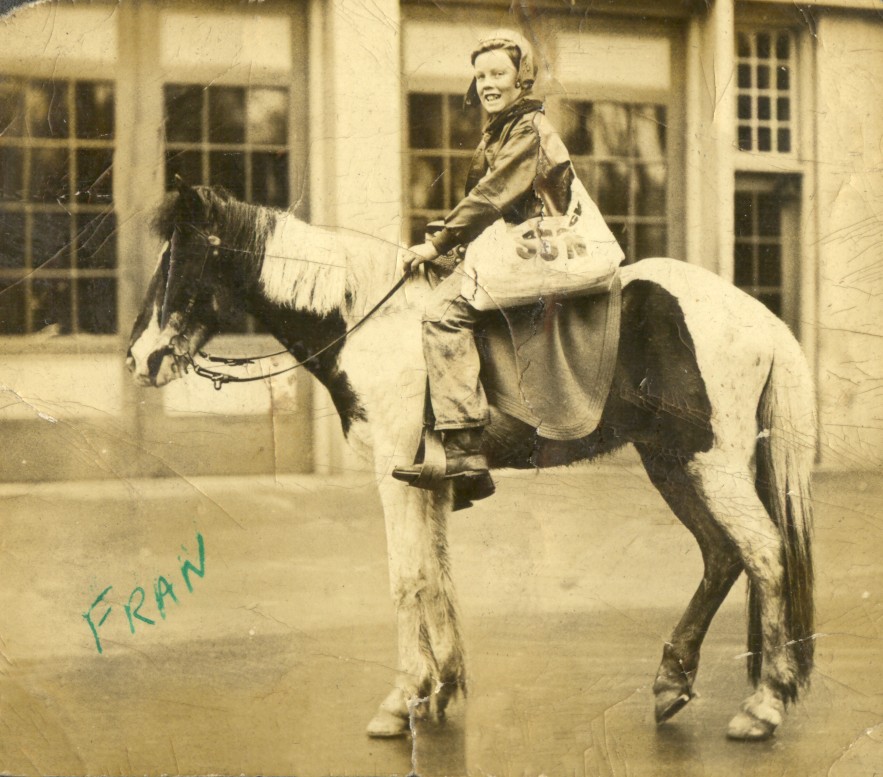
PS: Note that this article does not purposefully discriminate against the many girls and women who have acted as delivery agents for newspapers. In the past these female carriers certainly existed, but they were in the great minority, and information about them is difficult to obtain.  The photograph above was taken circa 1918-1920 and pictures my uncle Francis “Frank” Manning delivering the Merrimack Valley Sun newspaper.
————————
Some Sources:
1. “A History of Mass Communication: Six Information Revolutions,” by Irving E. Fang
2. “Educating the Consumer Citizen PR: A History of the Marriage of Schools, Advertising, and Media,” by Joel H. Spring

Posted in History, New Hampshire Men | Leave a comment

Swanzey New Hampshire Actor and Playwright, Henry Denman Thompson (1833-1911)

Henry Denman Thompson, eldest son of Rufus and Anne (Baxter) Thompson, was born near Girard, Erie Co PA 15 Oct 1833.

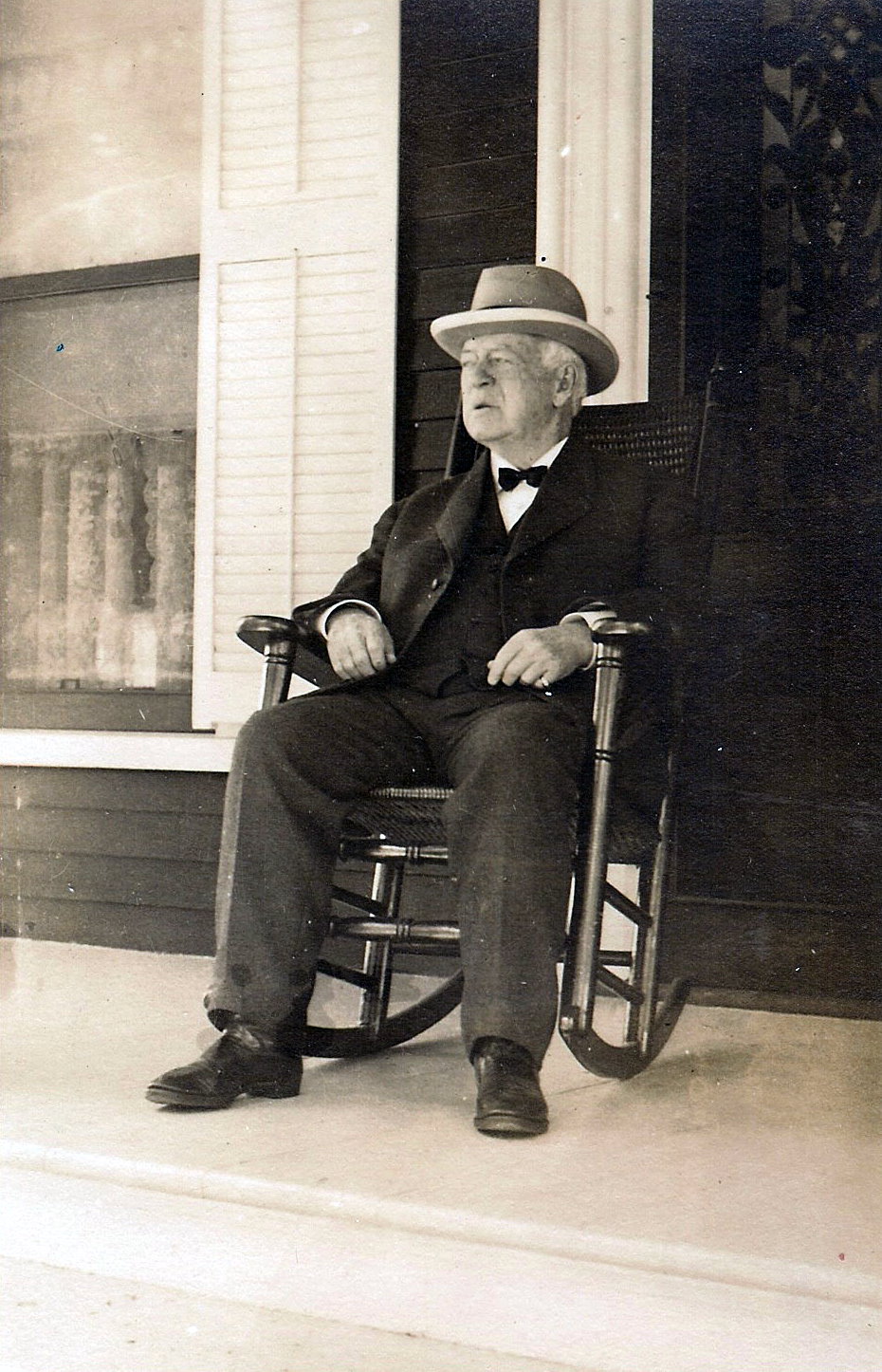
Denman Thompson sitting on front porch Swanzey NH

Denman Thompson sitting on his front porch prior to 1911, Swanzey NH, from an old postcard owned by J.W. Brown

For three generations his ancestors had been born and lived in Swanzey New Hampshire. In 1847 when he was fourteen years old, he returned with his family to Swanzey NH,  the town which became the inspiration for writing his famous play, “The Old Homestead.”

While living there in Swanzey, Denman attended the Mount Caesar Seminary (now the Mount Caesar Union Library). His first appearance on the stage was at the Howard Athenaeum, Boston (1850) where he acted as a “supe” for Charlotte Cushman in “Lady Macbeth.” His first “speaking part” came two years later in “The French Spy,” in which he appeared in the character of the Oarsman. Continue reading

Posted in Current Events, N.H. Historical Markers, New Hampshire Entertainers, New Hampshire Men, Poetry, Travel | Tagged , , , , , | 8 Comments

New Hampshire Slanguage: Hornpout

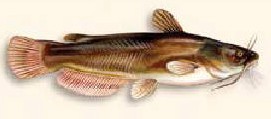
No self-respecting New Hampshire fisherman (or woman) can ply their leisure pastime for long…

before they end up with a hornpout on their line. At this point if you are wondering what the heck it was that I caught–in New Hampshire “hornpout” is just our local name for a catfish,   and it is also known as a bullhead, and horned pout. Continue reading

Posted in New Hampshire Slanguage | Tagged , , , , , , , , , , , , , , , , | 2 Comments

North Hampton New Hampshire: Fuller Gardens

In the early 1920’s, construction of Fuller Gardens, a formal estate garden in the Colonial Revival style, in North Hampton began at the order of Alvan Tufts Fuller, to honor his wife Viola.

He was a Massachusetts businessman (built the Packard Motor Car Company) who summered on Boars Head (now North Hampton) New Hampshire at his estate called Runnymede-by-the Sea. Today these gardens are open to the public and can be found at 10 Willow Avenue, in North Hampton NH.  This 2-acre lot was once the grounds for the Fuller home (mentioned above) and features more than 1,700  rose bushes, and hostas, as well as a Japanese garden with wisteria, rhododendrons, azaleas, and koi pond.  The gardens were designed by Arthur Shurtleff and later expanded by the Olmsted Brothers. See here for days and times to visit. Continue reading

Posted in History, Irish in New Hampshire, New Hampshire Women | Tagged , , , , , , , , , , , , , , , , | 2 Comments

New Hampshire’s Mount Washington Cog Railway

The Mountain Washington Cog Railway is unique–it is the first cog railway built in the world, and it has the second steepest grade of any railroad in the world (it was first until the railway up Mount Pilatus in Switzerland was built).

Early photograph of cog railway.

In 1857 inventor Sylvester Marsh (1803-1884) climbed this mountain with a friend (Rev. A.C. Thompson, the pastor of the Eliot Church in Roxbury MA). When night came, bad weather was upon them (hurricane winds, freezing rain, etc.) and they lost their way. Finally almost completely exhausted, they came upon the Tip Top House.

Prior to this Sylvester Marsh had been involved in the meat-packing and grain-handling business. He had already built a  funicular railway up Mount Holyoke in Massachusetts (about 1/10 of the height of Mt. Washington).  He had already invented the mechanism to be used for the Mt. Washington Railway but had to fight through much opposition and ridicule to get his project approved. In 1858 he exhibited a model to the State Legislature, and received a charter to build it. (Reportedly one legislator suggested that he should also receive permission to build a railway to the moon).

The Cog Railway uses a “rack and gear” system that uses a toothed rack laid on the tie between the rails, and a gear on a driving axle of the locomotive that engaged the rack to secure between adhesion. Sylvester Marsh was awarded several patents specific to the Cog Railway. His earliest patent was dated September 10, 1861 and was for “locomotive engines for ascending inclined plans.” Another one, No. 44,965, dated November 8, 1864 is related to the atmospheric brake. Additional patents were awarded for improvements he made in the original.

In 1864-1865 he bought an inn called The White Mountain House and more than 16,000 ares of land in Crawford Notch. The base station was located where the Ammonoosuc River flowed onto his property.  The three mile railway right-of-way up the mountain was acquired by eminent domain.

First a turnpike had to be built to bring vehicles to the foot of the mountain (began in April 1866), following by the actual construction of the railway (began May 1866). The section to Waumbeck was completed in 1867 (3/4 mile), and to the top of Jacob’s Ladder in 1868 (1 mile). Finally the work was completed in July 1869.  The track and stations having cost about $150,000.  The railway was formally opened to the public August 14, 1868 when it was only completed as far as Jacob’s Ladder. Every piece of material for its construction (for both railway, locomotive and cars) had to be hauled up, through the woods by ox teams.

During the building of the cog railway, the workmen figured out a way of “rapid transit” to get back down the mountain using wooden plank “slideboards” that they called “Devil’s Shingles.” The slide-board was about three feet long and would rest lengthwise on the center rail. The braking mechanism was an iron handle that gripped the flange of the rail rightly. A dangerous practice, they were able to slide down the 3 mile long track within minutes. The death of an employee resulted in the railroad discontinuing that type of conveyance.

The first public trial trip of the engines upon the Mount Washington Railway, was on August 29, 1866. The guest riders included a large group of railroad presidents and other managers. In 1868 Sylvester Marsh was one of the officers of the Mount Washington Railroad, along with J.E. Lyon of Boston, Hon. Henry Keyes of Newbury VT, Judge Upham, Hon. Onslow Stearns and Nathaniel White of Concord NH.

In 1869, President Ulysses S. Grant, with his family visited Mount Washington. They ascended the railway and were pleased with their trip. During 1870 about five thousand persons were carried over the railway to the top of Mt. Washington. [See Granite Monthly, story in Feb 1903 by Alice Bartlett Stevens].  President and Mrs. Hayes made their fifth visit to the summit in 1877 (however it is uncertain whether they used the cog railway, or private car. In the summer of 1882 the railway carried up eleven thousand people to the mountain top.

The first locomotive (Old Peppersass) that was designed by Mr. Marsh was built by Campbell and Whittier of Boston MA (owned by Charles Whittier), and was used until it wore out. It was exhibited at the World’s Fair in Chicago in 1893, and continues to be on exhibit in New Hampshire. It had a vertical boiler and no cab.   The present type of locomotive was designed by Walter Aiken of Franklin NH. In 1883 the Manchester [NH] Locomotive works built the engine for a train for this railway.

In 1872-73 Mr. Marsh built the Fabyan House, on his property near the entrance to the base station. This hotel burned in 1951.

In 1867 a Swiss Envoy visited to see the railway and the Swiss Government asked for his help. In 1871 the Cog Railway was built at Mt. Rigi, in Switzerland, constructed from drawings and models provided by Marsh. In 1905 a similar cog railway was built up Uncanoonuc Mountains in Goffstown NH. This railroad is no longer in existence.

In 1976 the Mt. Washington Cog Railway was designated a National Historic Engineering Landmark.  The railway has been running continuously since 1869, except for a few years during the World Wars (i.e., 1918 and 1943-45).  The “Jacob’s Ladder” section (a trestle 25 feet high that angles upward at a grade of more than 37%) had to be rebuilt after the 1938 hurricane. It is a 3 hour round trip, with a 20-minute stop at the summit. Dress warmly as even though the weather may be mild at the bottom, the wind chill factor and fog at the peak will make this necessary.

New Hampshire Historical Marker #45,  was placed in 1967 at the base station road about 5 miles from the intersection of US Route 302. The marker states: “Completed in
1869 for $139,500, this unique railway was built through the genius and
enterprise of Herrick and Walter Aiken of Frankin and Sylvester Marsh
of Campton. Over three miles long, the average grade to the 6,293-foot
summit is one foot in four. Made safe by toothed wheel and ratchet, it
is the second steepest in the world and the first of its type.”

P.T. Barnum called the view at the top of Mt. Washington,
“the second greatest show on earth.” (And indeed it is). The photograph
shown above was taken in the 1930s by my father, showing the cog
railway.

Janice

*Additional Reading*

The Cog Railway (Official Site)

Last Run of Old Peppersass

Sylvester Marsh and the Mount Washington Railway

Mt. Washington Cog Railway History

SOURCES:
1. The White Mountains: A Handbook for Travellers, A Guide to the Peaks, etc., by Moses Foster Sweetser; J.R. Osgood and Company Publishers; 1876
2. Mountain Washington in Winter, Or the Experiences of A Scientific Expedition….,” by Charles Henry Hitchcock, Published by Chick and Andrews, 1871
3. The Bay State Monthly; Vol III, May 1885, No. II
4. Exercises at the centennial celebration of the incorporation of the town of Littleton, July 4, 1884; by J.E. Rankin; Littleton NH, 1887
——————————-

*PARTIAL FAMILY TREE OF SYLVESTER MARSH*

Thomas Marsh m. Mary Missing
Alexander Marsh (1628-1698) & Mary Belcher (1639-1678)
John Marsh (1678-1745) m. Sarah Wilson (1684-1747)

John Marsh, son of John & Sarah (Wilson) Marsh b. 14 Oct 1702 in Braintree, Norfolk Co MA and d. 7 Nov 1755 in East Haddam CT; he m. 30 July 1727 in Dorchester, Suffolk Co MA to Submit Woodard. She b. 7 Dec 1704 in Dorchester MA and d. 1 Apr 1788 in E. Haddam CT.
Children of John & Submit (Woodard) Marsh:
1. Elizabeth Marsh, b. 30 Apr 1729 in Braintree, Norfolk Co MA
2. John Marsh, b 22 Feb 1731 Braintree MA
3. +Edward Edmund Marsh, b. 19 Apr 1733 Braintree MA
4. Alice Wilson marsh, b. 5 Dec 1735 in Braintree MA
5. Submit marsh, b. 16 Aug 1738 in Braintree MA
6. Lemuel Marsh, b. 3 Aug 1741 in Braintree MA
7. Sarah Newton Marsh, b. 30 July 1745 in Braintree MA
8. Anna Marsh, b. 2 May 1748 in Braintree MA

Edward Edmond Marsh, son of John & Submit (Woodard) Marsh, b. 19 Apr 1733 in Braintree, Norfolk Co MA and d. 30 Dec 1811 in Campton, Grafton Co NH; He m. bef 1758 to Eleanor Holmes. She b. 1737 in/of Hadlyme CT.
Children of Edward E. & Eleanor (Holmes) Marsh:
1. Edmund Marsh, b. May 1758 E. Haddam CT;
2. +John Marsh, b. 1763 poss E. Haddam CT
3. Woodward Marsh, b. abt 1765 in CT;  was of Hadlyme CT; m. 7 Jan 1788 to Mary Cone
4. Holmes Marsh, b. abt 1767 in Campton NH
5. Sylvester Marsh, b. 1768 Campton NH; d. 22 June 1794
6. Newton Marsh, b abt 1770 Campton NH, d. abt 1773
7. Christopher Marsh, d. poss. W. Roxbury MA
8. Sarah Marsh, b. 1774 Campton NH
9. Alice Wilson Marsh, b. 1780, Campton, Grafton Co NH
10. Ebenezer Marsh
11. ?

John Marsh, son of Edward Edmond & Eleanor (Holmes) Marsh of East Haddam CT with his wife Mehitable (Percival) Marsh, traveled up the valley of the Merrimack River to settle in Campton NH in 1782. They settled on the east bank of the Pemigewasset River. History states they had 11 children.
Children of John & Mehitable (Percival) Marsh:
1.Newton Marsh, b. abt 1802 in Campton NH; m. Julia –. Had ch: Christopher (b abt 1833) and John M. (b abt 1842)
2. +Sylvester Marsh, b. 30 Sep 1803 in Campton NH, 9th of 11 children

Sylvester Marsh, was born 30 September 1803 in Campton, Grafton Co NH, the ninth of eleven children. He died 30 December 1884 in Concord, NH of pneumonia, and is buried in Blossom Hill Cemetery. He grew up in Campton NH (15 miles north of Franconia). At age 19 he left home, walking to Boston (about 117 miles). In 1827 he ran a meat stall at Quincy Market.   He was fascinated with railroad travel, being one of the first passengers on the first steam railroad from Albany to Schenectady New York. In 1833 he moved to Chicago Illinois, where he first opened a butcher-shop and then a meat packing-store on Dearborn Street between Lake and South Water Streets (at 340-6 N. Water Street). In 1837 he left for Dunkirk NY, returning a few years later to Chicago where he partnered with George W. Dole, as Dole & Marsh. He patented several devices including a lard-rendering device.   In the 1850s he invented a grain kiln that prevented spoilage of grain during storage, and spent a great deal of time experimenting with how to dry corn, using grain dryers.

He married 1st) 4 April 1844 in Monson MA to Charlotte D. Bates, dau of James & Eliza “Betsy” (Davison) Bates of Munson MA. They had three children, one dying young. At age 52 a widower with two children, he married 2nd) 23 March 1855 to Cornelia H. Holt, from St. Albans VT, daughter of Lumas T. Hoyt. They had three daughters. He and his family
removed to Jamaica Plain MA (a suburb of Boston).  In 1861 he returned to Chicago IL. In 1863 he moved to Brooklyn NY where he remained until 1864 when he removed to Littleton NH to work on building the Mt. Washington Cog Railway.   He lived there 15 years before removing to Concord NH. [Seee additional biography written by his great-grandson, Richard Joslin]
————
U.S. Census > 1860 United States Federal Census > Illinois > Cook > Chicago Ward 9
Sylvester Marsh 54 M Grain Dealer NH
Cornelia Marsh 34 F VT
John F. Marsh 15 M ILL
Mary E. Marsh 13 F ILL
Sylvester Marsh 4 M Mass
Geo H. Marsh 8/12 M Mass
Anne E. Ronno 28 F Servant Mass
Martha Dodge 24 F servant ME M Servant VT
————
U.S. Census > 1870 United States Federal Census > New Hampshire > Grafton > Littleton
Marsh, Sylvester 64 M W Railroad BUilder 40,000/24000 NH
Marsh, Cornelia 43 F W Keeping House VT
Marsh, Sylvester 14 M W attending school MA
Marsh, Cornelia 9 F E Attending School IL
Marsh, Jessie 5 F W at home MA
Marsh, infant, 1/12 F W NH
Clark, Mary 18 F W domestic Servant, Canada
————
U.S. Census > 1880 United States Federal Census > New Hampshire > Grafton > Littleton > District 96
Marsh, Sylvester W M 75 railroad manager NH NH NH
Marsh, Cornelia W F 54 wife keeps house VT Conn VT
Marsh, Jessie A. W F 15 dau at school NH NH VT
Marsh, Harriet A. W F 10 daughter at school NH NH VT
Sullivan, Sarah W F 23 employee, does house work NH NH NH
————
Children of Sylvester & Charlotte D. (Bates) Marsh:
1. John F. Marsh, b. abt 1845 IL
2. Mary E. Marsh, b. abt 1847 IL; she resided in New York, and died 20 August 1852 at the age of 36.
3. child who died young
Children of Sylvester & Cornelia H. (Holt) Marsh:
4. Sylvester Marsh, b. abt 1856 MA; in 1870 living with parents in Littleton NH
5. George H. Marsh, b abt 1859 MA, prob. died young
6. Cornelia Marsh, b. abt 1861 IL
7. Jessie Marsh, b. abt 1865 MA
8. Harriet Marsh, b. abt 1870 Littleton NH

Posted in N.H. Historical Markers, New Hampshire Glossary, New Hampshire Men, Structures, Travel | Tagged , , , , , , , , , , , , , , , , | 4 Comments