
Search on This Blog
Copyright Disclaimer
All rights reserved © 2006-2026
Janice A. Brown,
Blog: Cow Hampshire
www.cowhampshireblog.com
Formerly
blogharbor.cowhampshire.com
All unpublished works.Translate this Page
-

Women’s History
"The ongoing invisibility of women and girls is a serious issue for our country, and for the world. The invisibility of our history, heroes, stories, challenges, and success handicaps the future of all Americans, and it deeply affects our economy and our communities."--Megan Smith, U.S. Chief Technology OfficerWhat History Isn’t
“History isn’t about dates and places and wars. It’s about the people who fill the spaces between them.”
— Jodi Picoult, The StorytellerJune 2026 M T W T F S S 1 2 3 4 5 6 7 8 9 10 11 12 13 14 15 16 17 18 19 20 21 22 23 24 25 26 27 28 29 30 Recent Comments
- Donna Krauss on The Thread That Never Breaks: Why mtDNA Matters to Everyone
- Teresa (fhtess65) on The Best Place to Build Your Family Tree (and Keep Your Sanity Intact) — WikiTree
- Matthias on The Best Place to Build Your Family Tree (and Keep Your Sanity Intact) — WikiTree
- Patrick George Ashwood on The Best Place to Build Your Family Tree (and Keep Your Sanity Intact) — WikiTree
- Nancy on The Best Place to Build Your Family Tree (and Keep Your Sanity Intact) — WikiTree
Categories
- Boulders and Profiles
- Carnivals and Memes
- Cow Stories
- Creatures
- Current Events
- Genealogy
- Haunted New Hampshire
- History
- Holidays
- Humor
- Irish in New Hampshire
- Lost Faces of WW1
- Military of New Hampshire
- Military Squares
- Moovers And Shakers
- N.H. Historical Markers
- N.H. Missing Places
- Native Peoples
- New Hampshire Aviation
- New Hampshire Entertainers
- New Hampshire Glossary
- New Hampshire Inventors
- New Hampshire Men
- New Hampshire Politics
- New Hampshire Slanguage
- New Hampshire Sports
- New Hampshire Women
- NH Persons of Color
- NH Tidbits
- NH WW1 Military
- Not New Hampshire
- Oddities, Accidents and Crazy Weather
- Personal History
- Poetry
- R.I.P
- Really Old News
- Recipes
- Speechless Sunday
- Structures
- Travel
Pop Robin
Posted in History
Leave a comment
Poem: First a howling blizzard woke us by Lilja Rogers
New Hampshire Life in 1815
In 1815 travel was mostly on horseback, the mail being so carried in many places. Hotels were found in every four to eight miles. Feed for travelers' teams was, half baiting of hay, four cents; whole baiting, eight cents; two quarts of oats, six cents. The bar-room fire-place was furnished with a 'loggerhead,' not, at all times, for making 'flip.' The flip was made of beer made from pumpkin dried on the crane in the kitchen fire-place, and a few dried apple skins and a little bran. Half a mug of flip, or half gill 'sling,' six cents. On the table was to be found a 'shortcake,' the manufacture of which is now among the lost arts; our 'book' cooks can't make them. Woman's labor was fifty cents per week. They spun and wove most of the cloth that was worn. Flannel that was dressed at the mill, for women's wear, was fifty cents a yard; men's wear, one dollar.
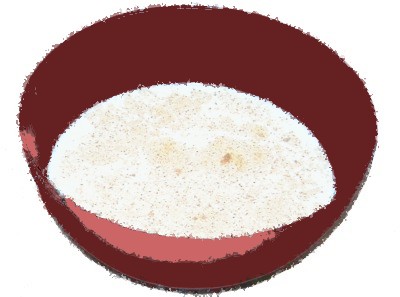
Farmers hired their help for nine or ten dollars a month–some clothing and the rest cash. Carpenter's wages, one dollar a day; journeymen carpenters, fifteen dollars a month; and apprentices, to serve six or seven years, had ten dollars the first year, twenty the second, and so on, and to clothe themselves. Breakfast generally consisted of potatoes roasted in the ashes, a 'bannock' made of meal and water and baked on a maple chip set before the fire. Pork was plenty. If 'hash' was had for breakfast, all ate from the platter, without plates or table-spread. Apprentices and farm boys had for supper a bowl of scalded milk and a brown crust, or bean porridge, or pop-robin. There was no such thing as tumblers, nor were they asked if they would have tea or coffee; it was “please pass the mug'”
The housewife had charge both of the dairy and kitchen, besides spinning and weaving, sewing and knitting, washing and mending for the “men folks.” The best room, often called “the square room” contained a bed, a bureau or desk, or a chest of drawers, a clock, and possibly a brass fire-set. Its walls were as naked of ornaments as the cave of Macpelah. We are describing a period which antedates the advent of pictures, pianos, carpets, lace curtains and Venetian blinds. It was an age of simple manners, industrious habits and untarnished morals.
–From the NH Patriot in the “History of New Hampshire to the Year 1830,” by Edwin David Sanborn and Channing Harris Cox, Published 1875, J.B. Clarke.
Posted in History, New Hampshire Women
Leave a comment
New Hampshire Missing Places: Pannaway

Photograph: Tablet at Odiorne’s Point, marking first settlement in New Hampshire. St. Clair Studio 1899-1920. The Miriam and Ira D. Wallach Division of Art, Prints and Photographs, Digital Public Library of America.
Pannaway is probably an American Indian word (Abenaki) meaning “place where the waters [of the ocean] spread out” into the marshes.
It was the name given the site of the first settlement in New Hampshire in 1623. Located in what is now Rye, New Hampshire, over time this area has been called Panaway, Pannaway Fort, Little Harbor, Rendezvous Point (American Revolution), Paskataway, Pascataquack, Piscataqua, Odiorne Point (for the Odiorne family who lived there), and Fort Dearborn. Continue reading
Posted in N.H. Missing Places, New Hampshire Men
Tagged Boston, David, Hampshire, new, NH, Noddle's Island, Odiorne, Odiorne's Point, pannaway, Thomson
8 Comments


