It has been suggested that genealogists are lacking the humor gene. Lets prove them wrong.
I challenge other viewers to visit JibJab, or the Newspaper Generator, or the “Fun Generator” of their choice (see my “Say Whoa” list in the right column for a few ideas), and create a hysterical masterpiece relating to genealogy, or specifically your own family. Let me know once you’ve created it, and I’ll add a link to it here.
I’ll start off with the following…
Janice
Note: in some cases the “movies” are not viewable using MS Explorer. In that case you should try the Firefox browser (why the heck are you using anything else?!?).
**Additional Links to Funny Genealogists**
–Forgive Me Ancestors– (My thanks to Colleen & Izzie at “The Oracle of OMcHodoy for the idea)
footnoteMaven at “FootnoteMaven”: FootnoteMaven Cuts a Rug- (With A Famous Writer)-
Terry Thornton at “Hill Country of Monroe County Mississippi”: Willie Puckerbrush Struck Dumb– (See 1880 Census, Column 17)
Lori Thornton at “Smoky Mountain Family Historian: Levi & Steve Do The Hula– (or Amish Gone Wild)
Becky Wiseman at “kinexxions”: Simpsonized And Cubed– (or Becky Gets Rubik’d)
Randy Seaver at “Genea-Musings”: Noted Genea-blogger Committed– (or “My Name is Randy Seaver, and I am a Geneaholic.”)
John Newmark at “Transylvanian Dutch”: “You’re On Notice“- (or “Stephen Colbert Does Transylvanian Dutch“) and –Chub-Baggins of Pincup’s Family Tree“- (or “My Hairy-footed Grampa“) and “Talk Like A Pirate Day Homesick Blues”
Apple at “Apple’s Tree”: Apple’s Dis(co)lation– (or “How to Become a Hip Transplant Candidate in One Easy Lesson“)
Jasia of “Creative Gene”: –But Not Too Proud– (or “The Polka-Playing Frenzy“)
Chris Dunham of “The Genealogue” –The Genealogue– (Chris didn’t submit an article, but he is the premier genealogist with a sense of humor — since 2005).
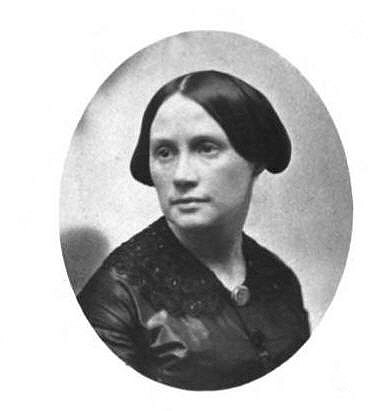
P.S. The faces you see in my “movie” are my paternal grandparents, Clarence & Mattie (Kilborn) Webster, my maternal grandmother Addie (Ryan) Manning, and my paternal 2nd great-grandmother, Nancy (Thompson) Webster. I’m not sure who the last guy is…. but I know he lives in New Hampshire, and I think he has something to do with making history documentaries and movies 😀 😀
P.P.S: Don’t groan, but I tried out the Bad Joke Generator. I used the word “Genealogist” and then keywords Family Tree, past, dead, research. It produced the following:
1. What’s a Genealogist’s Favorite Album?
The Joshua Family Tree.
2. What’s a Genealogist’s Favorite Film?
A Family Treetcar Named Desire.
3. What is Genealogist’s Favorite Arcade Machine?
Pasteroids.
4. What’s Genealogist’s Favorite Dessert?
Dead And Butter Pudding.
J