New Hampshire Missing Places: Grenier Field (or Grenier Air Base)

Back in the 1940s and 1950s residents would frequently hear airplanes and jets roar across
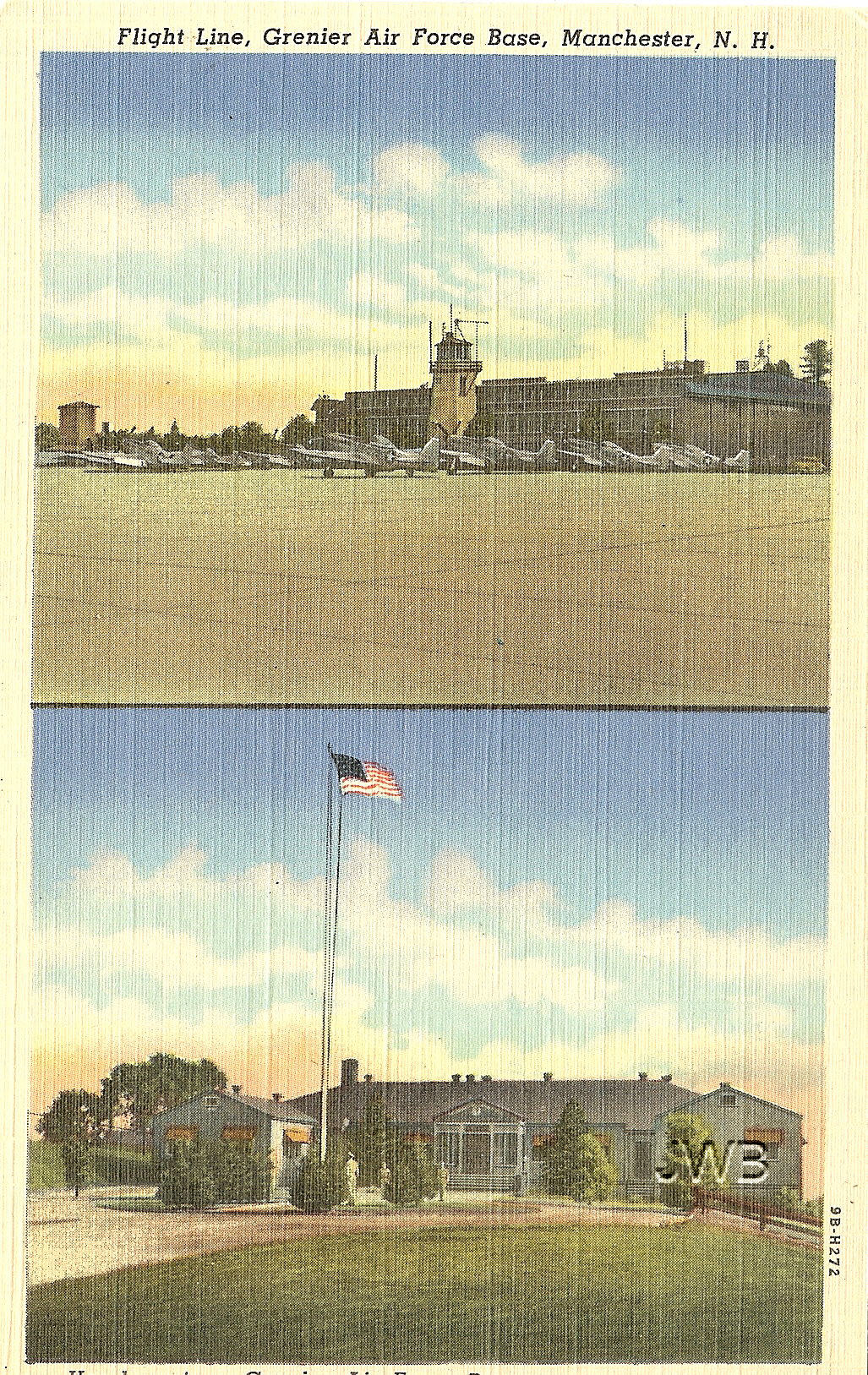
Grenier Field postcard NH

Postcard of Grenier Field, now the Manchester-Boston Regional Airport

the skies of southern New Hampshire.  The southeast Manchester and Londonderry areas were particularly affected.

It was not unusual to be wakened at night by the roar of engines from planes flying low enough to shake our house.  My parent’s home sat on top of a hill, and sat in a popular flight path.  Some days for entertainment, we would climb the fire escape, and lay on our backs on the rooftop to watch the airplanes fly over.

On the 22nd of February 1942 the Manchester airfield was named “Grenier Field” to honor 2nd Lieut. Jean Donat  Grenier. He was born in 1909 in Manchester, New Hampshire, the son of Alphonse and Ursula Grenier. He graduated from the University of New Hampshire, and was killed in a Utah plane crash (on 16 Feb 1934) while making a survey of a new mail route for the army.

In 1963 it was announced that Air Force Reserve Training at Grenier would be transferred to Pease Air Force Base by June 1966, but would be retained for Air National Guard. The Federal Government downsized its presence at Grenier Field until finally, between 1966-1968, the Air Force relocated all remaining flying units to other air bases and transferred control of Grenier Field to the municipalities of Manchester and Londonderry.

In 1968 the Londonderry Housing and Redevelopment Authority purchased 275 acres of land in Grenier Field for $440,000, and by 1972 it had 50 small industries.

In 1972 the US Air Force gave up 65 acres of land at what was by then Manchester’s municipal airport, with both the city of Manchester and the town of Londonderry seeking to develop it–Londonderry for an industrial village and manchester to expand the airport facilities. At the same time 17 acres and four buildings were transferred to the U.S. Army Reserve, and another 7 acres and 12 buildings to the Civil Air Patrol (to use as a Northeast Region encampment site and training center).

In 1978 the airport was once again called simply the “Manchester Airport.” In 1994 a 158,000 square foot passenger terminal was built and opened. In April 2006 this airport was officially renamed Manchester-Boston Regional Airport.

Despite this airport’s many name changes, there are a few of us who still call it “Grenier Field.”  Some habits are difficult to break.

This airport is the same place where Alan Shepard Jr. cleaned hangars and took flying lessons in the 1930s.

*Additional Reading*

-A Window into World War II: Grenier Field aka Manchester (NH) Airport

–History & Timeline of the Manchester-Boston Regional Airport–

–New Hampshire Aviation Historical Society. (added December 2010)

–New Hampshire’s Aviation Museum: A Bridge Between Past and Present (added September 2013)

Article updated 29 May 2014.
Posted in Military of New Hampshire, N.H. Missing Places, New Hampshire Aviation | Tagged , , , , , , , , | 5 Comments

New Hampshire’s State Animal: white tailed deer (Odocoileus virginianus)

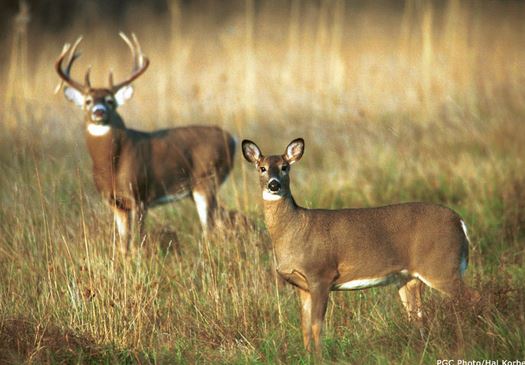
In 1983 New Hampshire officially named the white-tailed deer (also known as the Virginia

White Tailed Deer. Photograph Courtesy: Pennsylvania Game Commission Photo/Hal Korber. Used with Permission.

deer) as its official state animal.

This lovely animal has played a significant part in New Hampshire’s history.When Europeans first settled in New Hampshire, the white-tailed deer was in great supply. It was already an important food for the Native Peoples, along with providing clothing, and tools (from their antlers). Continue reading →

Posted in History | Tagged , , , , , , , , , , , , , | 1 Comment

Merrimack NH: The Baby On The Stove

MERRIMACK, (Thornton’s Ferry) has an infant twelve weeks old, which weighs two and one-quarter pounds, with its clothes on, but when born it weighed two and one-half pounds.

Its place of repose in the day-time is on the stove, which is heated by coal, thus an even heat, of 90 degrees is obtained, which is essential to keep life.

Published in “Farmer’s Cabinet,” 3 December 1878; Volume: 77; Issue: 22; Page: [2];

Posted in Really Old News | Leave a comment

Manchester New Hampshire Cigar Manufacturer, Director and Philanthropist: Roger G. Sullivan (1854-1918)

“In 1646 the shoemakers of Boston, provoked by ‘much bad work produced by their craft,’ petitioned ‘Ye Governor of Ye Bay Colonie’ that ‘all boots might be alike made well.’ So began America’s pride in Craftsmanship.  Pride in the production of the finest Quality still lives. It is in the spirit upon which in 1874 at Manchester, New Hampshire, Roger G. Sullivan founded 7-20-4–now the largest strictly hand-made cigar industry in the world….”

On July 9, 1930, page six of the Portsmouth (NH) Herald newspaper touted the above advertisement. At this time the company founder, Roger G. Sullivan had been dead for 12 years, but his legacy continues today.

Roger G. Sullivan was born in 1851 in Bradford NH of Irish parents. He lived most of his life in Manchester New Hampshire. His early education was in the public schools of Bradford and Manchester NH. At a young age began working at the Manchester Print Works. At the age of 14 he was indentured to learn the carriage-painting trade at South Amesbury MA for 3 years. At 19 he went into business as a cigar manufacturer, with two employees. In 1883 he started a cigar company that became famed in northern New Hampshire for selling a “ten cent cigar,” and eventually employing 200 people. His goods were sold throughout the United states. Continue reading →

Posted in New Hampshire Men | Tagged , , , , , , , , , , , , , , , , , , , | 22 Comments

New Hampshire’s Longest Place Name?

New Hampshire place names are something we can count on.

They are the constant anchors in our lives. No matter if you lived two hundred years ago, or today, Portsmouth is called by the same name, as is the Merrimack River.  There were, however, a few places that have be awarded new monikers.

The mouth of a New Hampshire stream, having possibly the longest place name in the State of New Hampshire is Quokquinapessakessanannagnog.  The gazetteer of the State of New Hampshire, published in 1823, reported that this name of 28 letters of “that part of this stream [Black Brook] near the mouth” in Mont Vernon New Hampshire, was called this by the Native Peoples.

Janice

Posted in New Hampshire Glossary | Tagged , , , , , | Leave a comment