This Is The Face of Genealogy

This is the face of genealogy…


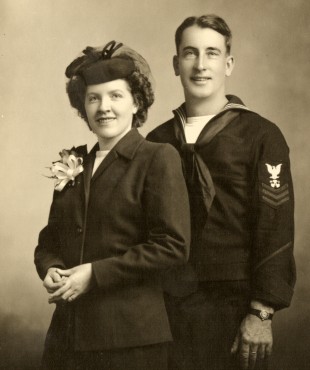
My parents, Berwin & Mary (Manning) Webster


My paternal grandparents, Clarence & Mattie (Kilborn) Webster


My maternal grandparents, Charles A. & Addie (Ryan) Manning, at my mother’s graduation.


My paternal 2nd great-grandfather, and nurse during the Civil War, Aaron Webster.


My paternal great-grandparents.  Charles A. & Minnie (Long) Kilborn.

This blog post was created to protest a recent graphic that accompanied an article about a local genealogy gathering (SCGS Jamboree) in the LAWeekly. Shame on them!

JB

Posted in Current Events, Genealogy, Personal History | Tagged , , , | Leave a comment

Isles of Shoals Landmark: Miss Underhill’s Chair

“There are some dreary little islands lying off the harbor of Portsmouth, N.H. about eight miles from the mainland,” or so the Isles of Shoals were described in 1873.  But of course that same year was notable for the double axe murder that occurred on one of those islands, namely Smuttynose. So ‘dreary’ might have been an appropriate adjective for the times.

Twenty-five years before, there was another untimely death related to axes that occurred on Star Island.  At the southern end of this wild place is a rock, more like a shelf on a cliff, called “Underhill Chair, or “Miss Underhill’s Chair.” The island’s teacher was reportedly, at the time, sitting upon the rock reading when she was washed away. Continue reading →

Posted in Boulders and Profiles, Genealogy, New Hampshire Women, Structures, Travel | Tagged , , , , , , , , , , , , | 2 Comments

Miss Underhill’s Chair, Star Island, Isles of Shoals

Scan of an old postcard showing Miss Underhill’s Chair, Isle of Shoals, New Hampshire
SEE ARTICLE: Miss Underhill’s Chair, Star Island, Isles of Shoals

SEE Article: Miss Underhill’s Chair

Posted in History | Tagged , , , , , , , , , , | 1 Comment

New Hampshire’s Vintage Beach Babes (and Boys)

When they gathered at the local swimming hole, or on the beach seaside, they didn’t think of themselves as “beach babes” or anything even remotely close to that.  They often wore as much clothing as they would on a normal day.

It was 1920, and anything else was considered “racy.” By today’s standards, their clothing, their attitudes, and even their terminology is vintage.

In the early to mid-1920s women wore knee length bathing gowns, with knee high stockings and regular shoes, or sometimes bathing shoes. The men wore boxer-style bathing trunks and mainly sleeved shirts.  Some times the men just rolled up their pants, and enjoyed the water “as is.”

By the 1940s the bathing suit had lost a bit of cloth.  Socks and shoes were no longer worn. During World War II, the girls back home didn’t want to be outdone by the pinup girls. And so they cautiously posed for their “fellas.”

A bit of New Hampshire trivia:
Considering that the average temperature of the Atlantic Ocean in summer at Hampton Beach is between 10-20 degrees F., it is freaking amazing that folks go in the water at all.  [see chart]. [PS: My good friend Randy Seaver of Genea-Musings, has informed me of the following: “On your beach post, the temperature graph shows 10 to 20 degrees Celsius, not Fahrenheit.  The corresponding temps are 50 to 68 degrees Fahrenheit, (see the right hand margin of the graph).  10-20 F would mean that ice was formed on the surface…  Cold enough to freeze the niblets off whatever and shrivel appendages.  —-Cheers — Randy.”]

Janice

P.S. This article was written as a submission for the 49th edition of the Carnival of Genealogy, “Swimsuit Edition,” located at Creative Gene. The deadline to submit YOUR article is June 1st, 2008. Surely you have a few photographs of bathing suit-clad relatives in your photograph albums. Don’t be late!

The bathing beauties found in this article are (in order of appearance):
(1) Photo of my Great-Aunt Mertie (Ryan) Miller, circa 1920 at Rye, New Hampshire. Notice the shoes, heels and all.

(2) Photo of my Great-Aunt Emma (Ryan) Ryan, and my great-grandfather, Patrick John “Jackson” Ryan at the ocean, Rye, New Hampshire.

(3) Photo of my Great-Aunt Nellie Ryan (top row far left) and her friends seaside, Rye, New Hampshire, circa 1920.
(4) Photo of my mother, Mary, dressed as a “hula-girl,” in Manchester New Hampshire. This photograph was sent to my father who was stationed in Hawaii at the end of WWII. I can hear her whispering to me from heaven, “You posted WHAT on the Internet!?!?!”

[Originally published Wed 28 May 2008]

Posted in Carnivals and Memes, New Hampshire Women | Tagged , , , , , , | 3 Comments

1871 Poem: The Best Cow in Peril

Old Farmer B. was a stingy man.
He keeps all he gets and gets all he can;
By all his friends he is said to be
As tight as the bark on a young birch tree;
He goes to church, and he rents a pew,
But the dimes that he gives to the Lord are few;
If he gets to heaven with the good and great,
He will be let in through the smallest gate.
Now, Farmer B. besides drags and plows,
Keeps a number of very fine calves and cows;
He makes no butter, but sends by express,
The milk to the city’s thirstiness.

“What do the city folks know about milk?
They are better judges of cloth and silk;
Not a man who buys, I’ll vow can tell
If I water it not, or water it well;
If they do not know when where’s the sin!
I will put the sparkling water in”
Thus talked, to himself, old Farmer B.;
How mean he is young and old can see.

One night it was dark, oh! fearfully dark;
The watch dog never came out to bark;
Old Farmer B. in his bed did snore;
When rap, rap, rap, nearly shattered his door;
And a voice cried out with a hasty breath
“Your best cow, neighbor, is choking to death.”

Clipping off the end of a rousing snore,
Farmer B bounded out on the bed room floor;
And the midnight voice was heard no more;
He pulled on his pants he knew now how,
For his thoughts were all on the choking cow;
He flew to the yard like a frightened deer,
For his stingy soul was filled with fear;
Looking around by his lantern’s light,
He found that the cows were there all right.

“I will give a dime,” cried Farmer B.
“To knew who played this trick on me:
May the hand be stiff and the knuckle sore,
That knocked to-night on my farmhouse door.”

With a scowl on his face and a shaking head,
Farmer B. again sought his nice warm bed;
No good thoughts came, they were all o’erpowered;
The little good nature he had had soured.

When he went to water his milk next day,
The midnight voice seemed again to say,
As he pumped away with a panting breath,
“Your best cow, neighbor, is choking to death.”
The meaning of this he soon found out,
For a stone was driven in the old pump’s spout.

Old Farmer B., when he drives to town,
Now meets his neighbors with a savage frown;
They smile, and ask as they kindly bow,
“How getteth along the best cow now?”

From: The Daily Patriot, (Concord, NH) Friday, August 25, 1871. Issue 73,  col E.
Posted in Cow Stories, Poetry | Tagged , , , , , , , | 8 Comments